
Premium Research Peptides.
Trusted Quality.
Advancing Research.
Premium Quality
High purity research peptides
Research Focused
Supporting scientific exploration
Third-Party Tested
Quality you can trust
Secure & Reliable
Secure packaging. Dependable service.
For Research Only · Not For Human Use
Literature Sourced
Mechanism and context descriptions reference peer-reviewed publications and clinical trial data.
No Human-Use Guidance
Zero dosing schedules, administration advice, or human protocol recommendations.
Regulatory Transparency
FDA approval status and regulatory position disclosed clearly for every compound.
Educational Archive
Research Compound Library
KLOW (80 mg Blend)
Multi-peptide regenerative blend: TB-500 (10mg), BPC-157 (10mg), KPV (10mg), and GHK-Cu (50mg). Combines tissue repair, anti-inflammatory, angiogenic, and collagen-synthesis pathways in a single vial.
GLOW (70 mg Blend)
Three-peptide regenerative blend of GHK-Cu (50mg), TB-500 (10mg), and BPC-157 (10mg). Synergistically promotes collagen synthesis, angiogenesis, cell migration, and tissue repair.
BPC-157 + TB-500
A 1:1 regenerative research blend combining BPC-157 and TB-500 for tissue repair, wound-healing, and recovery-focused studies.
GHK-Cu
Naturally occurring copper peptide studied for tissue remodeling, skin regeneration, collagen signaling, and wound-healing pathways.
Semax / Selank
A paired research reference for Semax and Selank, two neuroactive peptides studied for cognition, stress-response, anxiolytic, and neuroprotective pathways.
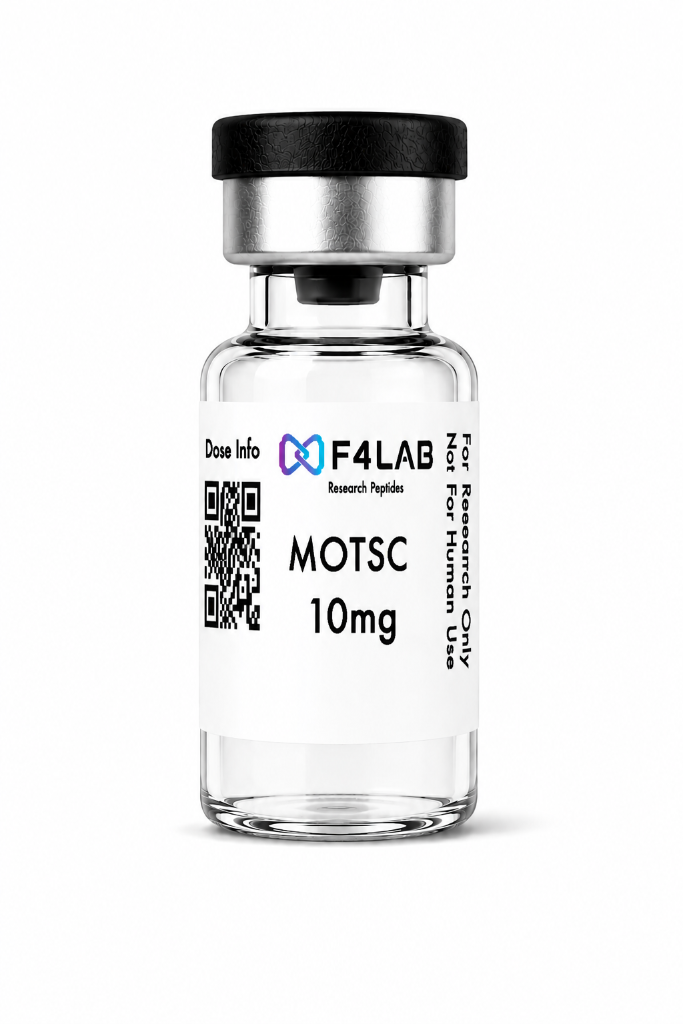
MOTS-C
Mitochondrial-derived peptide studied for AMPK activation, metabolic signaling, insulin sensitivity, and exercise-capacity research.
BPC-157 (5 mg Vial)
Synthetic 15-amino-acid peptide derived from a gastric protein sequence. Studied for tissue-healing, cytoprotective, and anti-inflammatory properties in preclinical models.
Epitalon (10 mg Vial)
Synthetic tetrapeptide (Ala-Glu-Asp-Gly) developed from pineal gland research. Studied for telomerase activation, telomere elongation, melatonin normalization, and geroprotective effects.
CJC-1295 No DAC (5 mg Vial)
Synthetic 29-amino-acid GHRH analog (Modified GRF 1–29) studied for pulsatile growth hormone secretion while preserving the body's physiologic feedback loop.
NAD+ (500 IU Vial)
Nicotinamide adenine dinucleotide (NAD+) is an endogenous coenzyme found in all living cells. Studied extensively for roles in mitochondrial energy metabolism, DNA repair, sirtuin activation, and cellular aging processes.
CJC-1295 No DAC + Ipamorelin
A growth-hormone secretagogue research blend combining a GHRH analog with a selective GHS peptide for pulsatile GH-pathway studies.
Tesamorelin (10 mg Vial)
Synthetic N-terminally modified analog of human growth hormone-releasing hormone (GHRH). Studied for selective visceral adipose tissue reduction and pulsatile GH stimulation.
Tesamorelin (5 mg Vial)
Synthetic N-terminally modified analog of human growth hormone-releasing hormone (GHRH). Studied for selective visceral adipose tissue reduction and pulsatile GH stimulation.
NAD+ (1000 mg Vial)
Nicotinamide adenine dinucleotide (NAD+) is an essential redox coenzyme and sirtuin cofactor involved in cellular energy metabolism, DNA repair, and mitochondrial function. Research protocols explore NAD+ repletion for aging-related decline and metabolic dysfunction.
Kisspeptin (10 mg Vial)
Kisspeptin-54 is a 54-amino-acid peptide cleaved from the kisspeptin-145 precursor and the endogenous ligand of the GPR54 (KISS1R) receptor. Studied for its role as a master regulator of gonadotropin-releasing hormone (GnRH) pulsatility, reproductive axis signaling, and hypothalamic-pituitary-gonadal (HPG) axis function.
BPC-157 + TB-500 (20 mg Wolverine Blend)
A 1:1 regenerative research blend combining BPC-157 (10 mg) and TB-500 (10 mg) — double the mass of the standard 10 mg Wolverine vial — for tissue repair, wound-healing, and recovery-focused studies.